
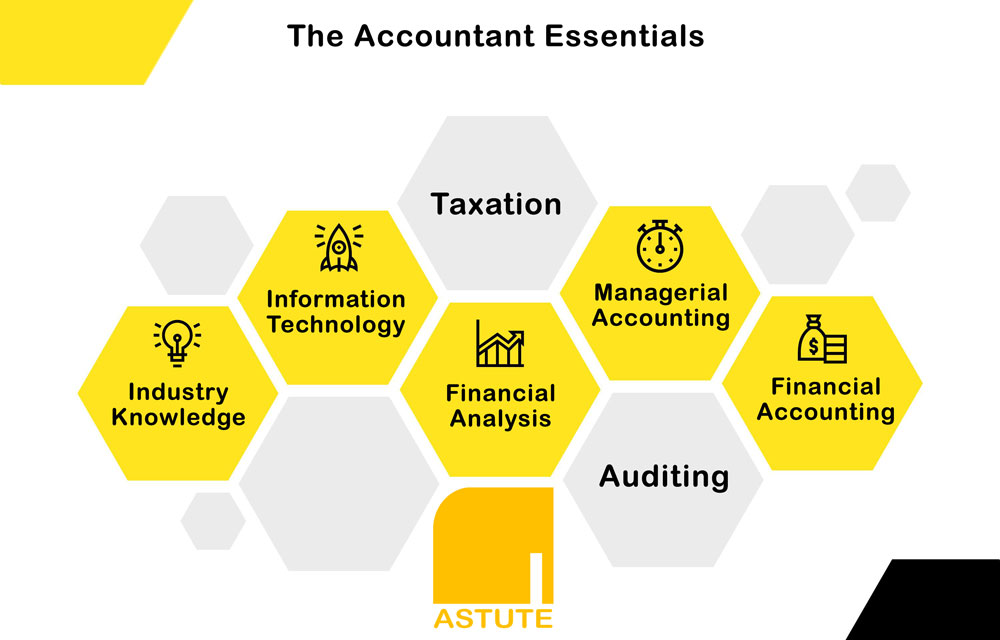
The Accountant Essentials
Accountants play a crucial role in the financial management of businesses and individuals. Here are some essential areas of knowledge that accountants should possess:
Financial Accounting :
Understanding Generally Accepted Accounting Principles (GAAP) or International Financial Reporting Standards (IFRS) is fundamental. Accountants should be able to prepare financial statements such as balance sheets, income statements, and cash flow statements.
Managerial Accounting :
This involves analyzing financial information to assist management in making business decisions. Cost accounting, budgeting, variance analysis, and performance measurement are key components.
Taxation :
Knowledge of tax laws and regulations is essential for ensuring compliance and minimizing tax liabilities for individuals and businesses. This includes understanding income tax, sales tax, payroll tax, and tax planning strategies.
Auditing :
Auditing involves examining financial records to ensure accuracy and compliance with laws and regulations. Accountants should understand auditing standards, procedures, and techniques.
Financial Analysis :
Being able to interpret financial data and ratios to assess the financial health and performance of an organization is critical. This includes analyzing profitability, liquidity, solvency, and efficiency.
Information Technology :
With the increasing use of accounting software and technology, accountants should be proficient in relevant software such as QuickBooks, Excel, and ERP systems. Knowledge of data security and privacy regulations is also important.
Ethics and Professionalism :
Upholding ethical standards and integrity is essential in the accounting profession. Accountants should adhere to professional codes of conduct and maintain confidentiality.
Communication Skills :
Accountants need strong communication skills to effectively convey financial information to stakeholders, both orally and in writing. This includes preparing reports, presenting findings, and providing financial advice.
Business and Industry Knowledge :
Understanding the specific industry or business sector in which they operate is beneficial for accountants to provide relevant insights and support decision-making.
Continuing Education :
Staying updated with changes in accounting standards, regulations, and technology through continuing education and professional development is crucial for accountants to maintain their competence.
At Astute we have skilled accountants and tax experts. Contact us today to get free help. Click here to connect with us.
Arpita Desai
Each type of cost accounting serves a specific purpose and is suited to different industries and situations. Choosing the right method depends on factors such as the nature of the business, the complexity of operations, and the information needed for decision-making.